How Cloud Software Has Changed the Way People Work
In the past, the way people worked was strongly connected to physical locations, office computers, and stored files. Employees usually needed to be present in the office to access important documents, communicate with team members, or complete professional tasks. Businesses depended on local servers, installed software, and traditional methods of managing information. However, the introduction of cloud software has completely changed this approach. Today, people can work from almost anywhere, access their files instantly, and collaborate with others in real time.
Cloud software has become one of the most important technologies shaping the modern workplace. It allows users to store data, run applications, and manage tasks through the internet instead of relying only on personal computers or office systems. This change has created a more flexible, connected, and efficient working environment for individuals, companies, and organizations around the world.
The growth of cloud software has changed how employees communicate, how businesses operate, and how teams complete projects. From small businesses to large international companies, many organizations now use cloud based tools to improve productivity and reduce unnecessary costs. Understanding how cloud software has changed the way people work helps us see why this technology has become such an important part of modern professional life.
What Is Cloud Software?
Cloud software is a type of application that runs through internet based servers instead of being installed and stored only on a local computer. Users can access these programs through web browsers or mobile applications whenever they have an internet connection.
Traditional software usually required users to install programs on individual computers. For example, a company might purchase software licenses, install programs on office computers, and maintain its own servers to store information. Cloud software removes many of these limitations by providing services through online platforms.
Popular examples of cloud software include online document editors, project management tools, cloud storage services, communication platforms, and business applications. These tools allow users to create documents, share information, manage projects, and communicate with teams without being limited by a specific device or location.
The Rise of Remote Work
One of the biggest changes created by cloud software is the growth of remote work. Before cloud technology became common, working from home was difficult because employees needed access to office systems and physical files. Cloud software has removed many of these barriers.
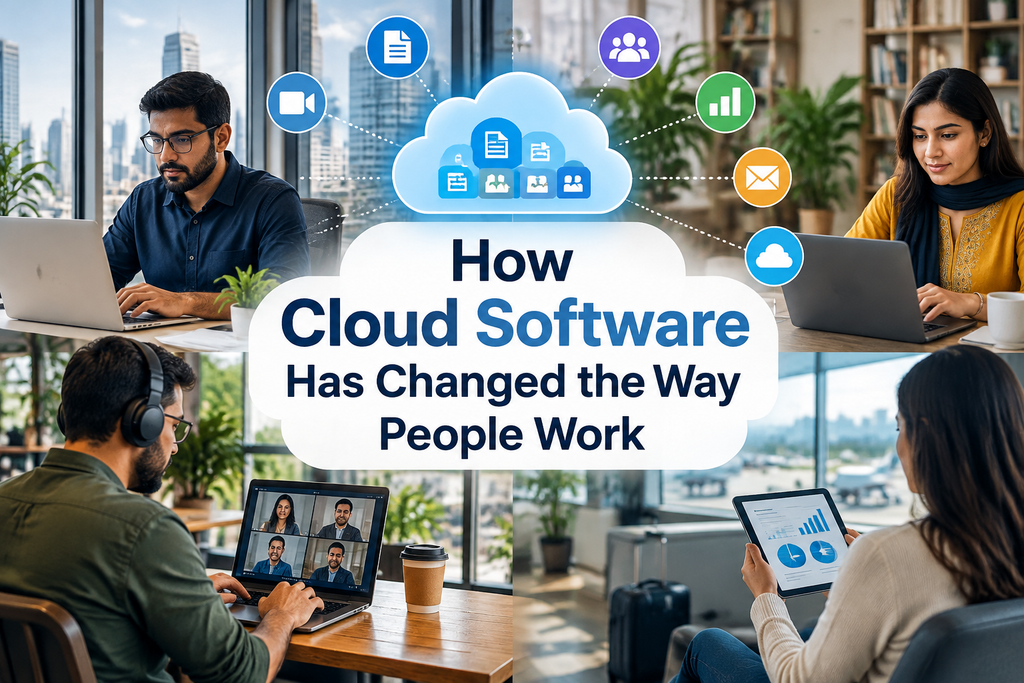
Today, employees can work from home, coffee shops, coworking spaces, or even while traveling. They can access company files, attend online meetings, and complete assignments using cloud based platforms. This flexibility has changed the traditional idea of a workplace.
Many companies now use a hybrid work model where employees divide their time between offices and remote locations. Cloud software makes this possible by ensuring that workers can stay connected regardless of where they are.
Remote work has also created opportunities for people who previously faced challenges with traditional office environments. Professionals can now work with companies located in different cities or countries without needing to relocate.
Easier Collaboration Between Teams
Cloud software has transformed teamwork by making collaboration faster and easier. In the past, employees often shared files through email attachments or physical storage devices. This process could create confusion because different versions of documents existed in different places.
With cloud software, multiple people can work on the same file at the same time. Team members can edit documents, provide feedback, and track changes instantly. Everyone has access to the latest version of information, which reduces mistakes and saves time.
For example, a marketing team can create a campaign plan online while designers, writers, and managers contribute from different locations. A software development team can manage projects and solve problems together using cloud based tools.
This improved collaboration has made teamwork more organized and efficient. People no longer need to be in the same office to achieve common goals.
Increased Productivity and Efficiency
Cloud software has helped people complete tasks faster and more effectively. Many cloud applications include automation features that reduce repetitive work and save valuable time.
Businesses can automate processes such as data collection, customer management, financial reporting, and employee communication. This allows workers to focus on more important tasks that require creativity and decision making.
Cloud based project management software also helps teams organize their responsibilities. Employees can track deadlines, assign tasks, monitor progress, and identify problems before they become serious issues.
By improving organization and reducing unnecessary manual work, cloud software has increased workplace productivity across many industries.
Access to Information Anytime and Anywhere
One of the greatest advantages of cloud software is easy access to information. Traditional systems often limited users to specific computers or office networks. Cloud technology allows people to access their data from different devices.
A business owner can check reports from a smartphone while traveling. An employee can review important documents from home. A student can access learning materials from any location.
This constant availability has created a more connected working environment. People are no longer restricted by physical offices or specific machines.
However, easy access also requires strong security practices. Organizations must protect sensitive information by using strong passwords, security systems, and proper access controls.
Lower Business Costs
Cloud software has changed the financial side of technology for many businesses. Traditional software systems often required large investments in hardware, maintenance, and technical support.
Cloud solutions usually operate through subscription models, allowing companies to pay for the services they need without purchasing expensive equipment. This makes advanced technology available even to small businesses with limited budgets.
Companies also save money because they do not need to maintain large physical servers or hire extensive technical teams for basic system management. Cloud service providers handle many updates, maintenance tasks, and security improvements.
This cost effective approach has allowed more businesses to adopt modern digital tools.
Better Communication in Modern Workplaces
Communication has improved significantly because of cloud software. Employees can now connect through online meetings, instant messaging platforms, and shared workspaces.
Before cloud communication tools became common, businesses relied heavily on phone calls, emails, and face to face meetings. While these methods are still useful, cloud platforms provide faster and more interactive communication.
Teams can discuss ideas instantly, share files during meetings, and solve problems together. This has made business communication more flexible and responsive.
Global companies especially benefit from cloud communication because employees from different countries can work together easily.
Improved Data Security and Backup
Many people believe that storing information online is risky, but modern cloud software providers invest heavily in security. They use encryption, backup systems, and advanced monitoring technologies to protect user data.
Cloud software also reduces the risk of losing information because of hardware failures. If a computer is damaged or lost, important files can still be available through the cloud.
Automatic backups help businesses recover information quickly after unexpected problems. This reliability has made cloud software an important choice for organizations that need secure data management.
Supporting Small Businesses and Entrepreneurs
Cloud software has created new opportunities for small businesses and entrepreneurs. In the past, advanced business technology was often expensive and difficult to manage. Today, small companies can use professional tools without needing large budgets.
A small online store can manage customers, payments, marketing, and inventory through cloud platforms. Freelancers can communicate with clients and manage projects from anywhere in the world.
This accessibility has helped more people start businesses and compete in digital markets.
The Future of Cloud Software
The role of cloud software will continue to grow as technology develops. Artificial intelligence, automation, and advanced data analysis are increasingly being combined with cloud platforms to create smarter working environments.
Future workplaces may rely even more on intelligent cloud systems that help employees make decisions, organize information, and complete tasks automatically.
As internet access improves around the world, cloud software will become available to even more people. The workplace will continue moving toward greater flexibility, connectivity, and digital collaboration.
Conclusion
Cloud software has completely changed the way people work by making workplaces more flexible, connected, and efficient. It has allowed employees to work from different locations, improved teamwork, reduced business costs, and provided easier access to important information.
The shift from traditional software systems to cloud based solutions represents a major transformation in modern work culture. Businesses and individuals can now use powerful digital tools without being limited by physical locations or expensive infrastructure.
As technology continues to advance, cloud software will remain a key part of the future workplace. It has already changed how people communicate, collaborate, and complete their daily tasks, and its influence will continue to shape the way we work for many years to come.

What Is Edge AI and Where Is It Being Used?

What Generative AI Means for Everyday Computer Users

What Automation Software Can Do for Everyday Tasks
About The Author
