
How Smartphone Battery Capacity Affects Daily Usage
Smartphones have become an important part of everyday life. People use them for communication, entertainment, navigation, photography, online shopping, banking, work, study, and many other activities. Because smartphones are used so frequently, battery life has become one of the most important things people consider when choosing a new phone.
One specification that often appears in smartphone advertisements is battery capacity. It is usually written in milliampere hours, commonly shown as mAh. You may see smartphones with 4000 mAh, 5000 mAh, 6000 mAh, or even larger batteries.
A higher number may look better, but battery capacity alone does not tell the complete story. Daily battery performance also depends on the processor, display, software, network connection, apps, brightness, and the way a person uses the phone.
Understanding how smartphone battery capacity affects daily usage can make it easier to choose a phone that fits your routine. It can also help you understand why two phones with the same battery capacity may give very different battery life.
What Smartphone Battery Capacity Means
Smartphone battery capacity describes how much electrical energy a battery can store. It is normally measured in milliampere hours.
For example, a smartphone with a 5000 mAh battery can generally store more energy than a phone with a 3500 mAh battery. In simple terms, a larger battery usually has the potential to keep the phone running for a longer period before it needs to be charged.
However, battery capacity should not be confused with actual battery life.
Battery capacity tells you how much energy is available. Battery life tells you how long the smartphone can operate before that energy is used.
This difference is important because every smartphone consumes energy differently.
Why Battery Capacity Matters in Daily Life
Most people want their smartphones to last through a normal day without constantly looking for a charger.
A larger battery can provide more freedom during everyday activities. You may be able to use maps while travelling, watch videos, attend online meetings, browse social media, or take photographs without worrying that the phone will suddenly run out of power.
For people who spend many hours away from home, battery capacity can be especially important.
Students may use their phones for online learning and research. Office workers may depend on email, messaging, and video calls. Travellers may rely heavily on GPS navigation. Content creators may spend hours recording videos and editing photographs.
All of these activities consume battery power.
A phone with enough battery capacity can make these tasks more convenient.
Is a Bigger Smartphone Battery Always Better?
A larger battery often improves battery life, but it does not automatically mean that the smartphone will last longer than every phone with a smaller battery.
Imagine two smartphones.
The first phone has a 5000 mAh battery but uses an inefficient processor and a very bright high resolution display.
The second phone has a 4500 mAh battery but uses a highly efficient processor, optimized software, and a display that consumes less energy.
The second phone could sometimes provide similar or even better daily battery life.
This is why battery capacity should always be considered together with hardware and software efficiency.
How the Display Affects Battery Usage
The smartphone display is one of the biggest users of battery power.
Large screens usually require more energy than smaller screens, especially when they are used at high brightness.
Screen resolution also makes a difference.
A high resolution display requires the processor to handle more pixels. This may increase energy consumption, particularly during gaming, video playback, or other visually demanding tasks.
Brightness can have an even greater effect.
Using maximum brightness outdoors for several hours may drain the battery much faster than using moderate brightness indoors.
Many modern smartphones offer automatic brightness. This feature adjusts the screen according to surrounding light conditions and may help improve battery efficiency.
Refresh Rate and Battery Life
Many smartphones now offer displays with refresh rates such as 90 Hz, 120 Hz, or even higher.
Refresh rate describes how many times the screen updates its image every second.
A higher refresh rate can make scrolling and animations look smoother. However, refreshing the display more frequently can also require additional power.
Some phones solve this problem by using adaptive refresh rate technology.
Instead of keeping the screen at 120 Hz all the time, the smartphone can reduce the refresh rate when high speed is not necessary.
For example, the display may operate at a lower refresh rate while reading a static page and increase it while scrolling.
This can help balance smooth performance with battery efficiency.
Processor Efficiency Matters
The smartphone processor controls many important operations.
It handles apps, games, photography, artificial intelligence features, background tasks, and general system performance.
Modern processors are often designed to provide high performance while using less energy.
This means that a phone with an efficient processor may perform demanding tasks while consuming less battery power.
Processor manufacturing technology also plays a role.
Newer chips are often manufactured using smaller processes that can improve energy efficiency. However, the final battery performance still depends on the entire smartphone design.
A powerful processor does not necessarily mean poor battery life if it is properly optimized.
How Software Optimization Affects Battery Capacity
Software has a major influence on daily smartphone battery life.
The operating system controls background applications, notifications, network activity, location services, screen behaviour, and many other processes.
Well optimized software can reduce unnecessary battery consumption.
For example, a smartphone may limit an app that continues running in the background even when the user is not actively using it.
Some phones also include intelligent battery management features. These systems learn how the owner normally uses the phone and reduce activity from less important applications.
As a result, two smartphones with identical battery capacity may perform differently because their software manages power in different ways.
Battery Capacity and Social Media Usage
Social media applications can use a significant amount of battery power.
Apps often load images, play videos automatically, refresh content, send notifications, and communicate with online servers.
If someone spends several hours every day using social media platforms, a larger battery can be useful.
However, the network connection also matters.
Using social media with a weak mobile signal may consume more power because the smartphone has to work harder to maintain a stable connection.
Using WiFi in a location with a strong signal may sometimes be more battery efficient.
Battery Capacity and Video Streaming
Video streaming is another activity that can consume battery power quickly.
The smartphone needs to keep the screen active, process video, output sound, and maintain an internet connection at the same time.
Higher video quality can require additional processing and data transfer.
For someone who regularly watches movies, television programmes, educational videos, or online content, a larger battery may provide a noticeable advantage.
A phone that offers strong battery performance can make long video sessions more convenient, especially during travelling.
Battery Capacity and Mobile Gaming
Gaming can place heavy demand on a smartphone battery.
Modern mobile games often use the processor, graphics chip, display, speakers, internet connection, and cooling system at the same time.
This creates significant power consumption.
Even a smartphone with a large battery can lose charge quickly during demanding games.
For example, a 5000 mAh battery may easily last a full day with light usage, but several hours of intensive gaming may reduce battery life considerably.
Gaming performance should therefore be considered separately from normal daily battery performance.
Battery Capacity and Photography
Smartphone cameras also use battery power.
Taking a few photographs usually has a small effect, but extended photography sessions can consume much more energy.
Modern smartphones use computational photography. When a picture is taken, the device may capture multiple frames and combine them using complex processing.
Video recording requires even more energy.
Recording high resolution video for a long period can increase battery consumption because the camera sensor, processor, storage, display, and image stabilization systems may all be working continuously.
People who frequently record videos should pay close attention to battery performance.
GPS Navigation and Battery Consumption
Navigation is extremely useful, but it can also drain a smartphone battery quickly.
When using a navigation application, the smartphone may continuously use GPS, mobile data, the display, and background location services.
The screen often remains active for long periods as well.
A larger battery is particularly valuable for drivers, delivery workers, travellers, and people who regularly depend on navigation.
Keeping a car charger or power bank can also be useful during long journeys.
Mobile Networks and Battery Life
The type and strength of a mobile network can influence battery consumption.
Modern smartphones support technologies such as 4G and 5G. These networks can provide fast internet speeds, but battery usage depends on network conditions and smartphone hardware.
If the signal is weak, the phone may use additional power while trying to maintain communication with the network.
This explains why battery life may sometimes decrease more quickly in areas with poor reception.
Using airplane mode in areas where no network connection is needed can reduce unnecessary network activity.
What Battery Capacity Is Good for Light Users?
Light smartphone users may mainly use their phones for calls, messaging, occasional web browsing, and a small amount of social media.
For this type of usage, even a moderate battery can provide good daily performance if the smartphone is efficient.
A battery around 4000 mAh or above may be sufficient for many light users, although actual results vary by device.
Light users may also notice that their phone can last longer than one day between charges.
The important thing is not simply the battery number but how efficiently the smartphone uses that stored energy.
What Battery Capacity Is Good for Average Users?
Average users often combine many activities during the day.
They may use social media, watch videos, take photographs, browse websites, send messages, check email, and occasionally play games.
For this type of usage, around 4500 mAh to 5000 mAh has become common in many smartphones.
A well optimized phone with this level of battery capacity can often provide comfortable all day usage.
However, screen size, refresh rate, brightness, network conditions, and app usage will still affect the final result.
What Battery Capacity Is Good for Heavy Users?
Heavy smartphone users may spend many hours gaming, watching videos, using mobile data, recording content, or running demanding apps.
These users can benefit from larger battery capacities.
Smartphones with around 5000 mAh, 6000 mAh, or more may offer additional flexibility.
Still, even a large battery can drain quickly under continuous heavy usage.
Someone who plays demanding games for several hours should not expect the same battery life as someone who mainly uses messaging apps.
Usage behaviour remains one of the most important factors.
Battery Capacity and Smartphone Weight
Larger batteries can increase the size and weight of a smartphone.
Battery technology continues to improve, but manufacturers still need physical space inside the device to store energy.
Some people prefer thin and lightweight phones, while others are willing to accept a slightly heavier device in exchange for longer battery life.
This creates an important design balance.
A very large battery may improve endurance, but it can also make a smartphone thicker.
Choosing between portability and battery capacity often depends on personal preference.
Battery Capacity and Charging Speed
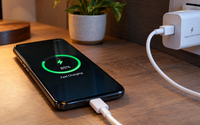
Battery capacity should also be considered together with charging speed.
A large battery takes longer to charge if the charger provides limited power.
For this reason, many modern smartphones support fast charging technology.
Fast charging can reduce the inconvenience of having a large battery. Even if the phone contains a 5000 mAh or larger battery, a compatible fast charger may restore a useful amount of power within a short period.
Charging speed should not be judged only by the maximum wattage shown in advertisements.
Actual charging time depends on battery size, charging technology, temperature, software, and charger compatibility.
Battery Health Changes Over Time
Smartphone batteries do not maintain their original capacity forever.
Most modern phones use lithium ion or similar rechargeable battery technology.
As the battery goes through repeated charging cycles, its ability to store energy slowly decreases.
A phone that provided excellent battery life when new may provide shorter battery life after several years of regular usage.
This is normal battery ageing.
Heat can also accelerate battery wear. Regularly exposing a phone to high temperatures can reduce long term battery health.
Proper charging habits and temperature management may help preserve battery condition.
How Background Apps Affect Daily Battery Life
Some applications continue using energy even when they are not visible on the screen.
They may check for new messages, update location, download information, or send notifications.
If many apps perform background activities, battery life can decrease.
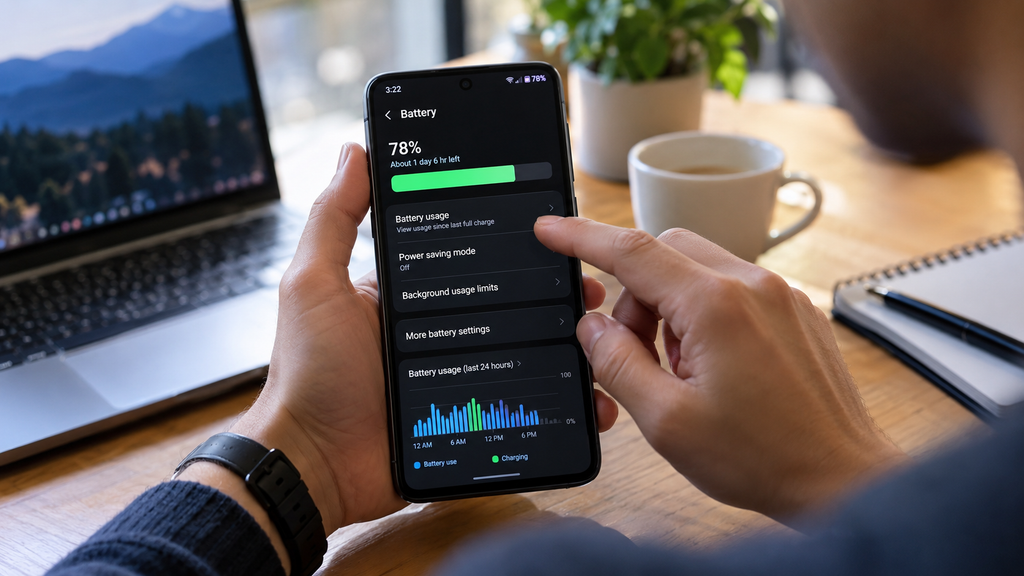
Most smartphones include battery settings that show which applications consume the most energy.
Checking these settings occasionally can help identify unusual battery usage.
Restricting unnecessary background activity may improve daily battery performance without changing the battery itself.
Simple Ways to Improve Smartphone Battery Life
Battery capacity cannot be increased through software, but energy consumption can often be reduced.
Using moderate screen brightness can make a noticeable difference. Turning off features that are not currently needed can also help.
Location services, Bluetooth, mobile hotspot, and high performance gaming modes may consume additional power when active.
Battery saver modes are useful when the remaining charge becomes low.
These modes may reduce background activity, processing performance, visual effects, and screen brightness in order to extend operating time.
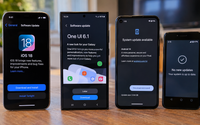
Keeping the operating system and important applications updated can also be useful because updates sometimes include efficiency improvements.
Should Battery Capacity Be the Main Buying Factor?
Battery capacity is important, but it should not be the only factor when choosing a smartphone.
A good phone should offer a balance of battery life, performance, display quality, camera performance, software experience, charging speed, and overall build quality.
Reading real world battery tests can often be more useful than simply comparing mAh numbers.
If one phone has a 5000 mAh battery and another has a 4500 mAh battery, it is not safe to assume that the first phone will always provide better endurance.
Efficiency is equally important.
Understanding Your Own Daily Usage
The best smartphone battery capacity depends on the person using the phone.
Someone who works from home and has easy access to a charger may not need an extremely large battery.
A traveller who spends long hours away from power outlets may value battery endurance much more.
Before choosing a smartphone, think about how you normally use your current device.
Consider how much time you spend watching videos, gaming, browsing social media, using navigation, taking photographs, and making calls.
Your personal habits can tell you more about your battery needs than advertisements alone.
Final Thoughts
Smartphone battery capacity plays an important role in daily usage because it determines how much energy the device can store. In general, a larger battery gives a smartphone more potential to operate for longer periods between charges.
However, battery capacity is only one part of the complete picture.
Display brightness, screen refresh rate, processor efficiency, software optimization, network conditions, gaming, video streaming, GPS navigation, and background applications can all influence battery life.
This is why two smartphones with similar battery capacities may provide very different experiences.
For light users, a moderate battery may easily last throughout the day. Average users often benefit from batteries around the 4500 mAh to 5000 mAh range. Heavy users may prefer larger batteries, especially if they regularly play games, stream videos, travel, or use mobile data for long periods.
When comparing smartphones, it is useful to look beyond the battery capacity number. Real world battery tests, charging speed, software efficiency, and long term battery health are also worth considering.
The best smartphone battery is not simply the biggest one. It is the battery that works efficiently with the phone’s hardware and software while providing enough power for your normal daily routine.
Understanding this relationship makes it easier to choose a smartphone that stays useful from morning until night without turning charging into a constant concern.

How Smartphone Processors Affect Everyday Performance
Understanding Fast Charging on Modern Smartphones
Why Some Smartphones Receive Software Updates for Longer
About The Author
