
Understanding Bluetooth and Its Everyday Uses
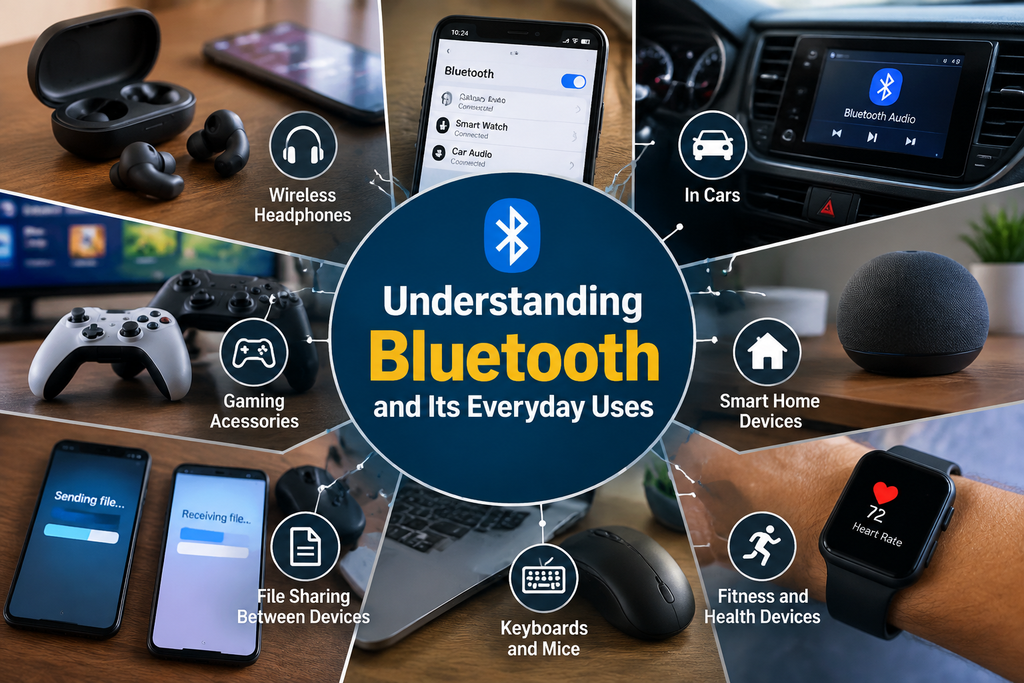
Bluetooth has become one of the most common wireless technologies in modern life. Many people use Bluetooth every day without thinking about how it works or how much it has changed the way we connect devices. From wireless headphones and smart watches to car systems and home appliances, Bluetooth technology allows different devices to communicate without using cables. It has made digital experiences easier, faster, and more convenient.
When I started learning about Bluetooth technology, I realized that it is not just a simple connection feature in smartphones. It is a complete wireless communication system designed to transfer data over short distances. The technology has developed over many years and continues to improve with new versions that provide better speed, security, and energy efficiency.
In this article, I will explain what Bluetooth is, how it works, its history, different versions, and the everyday uses that make it an important part of modern technology.
What Is Bluetooth Technology?
Bluetooth is a wireless communication technology that allows electronic devices to exchange information over short distances. Instead of using physical cables, Bluetooth uses radio waves to create a connection between two or more devices.
The main purpose of Bluetooth is to provide a simple and reliable way for devices to communicate. For example, a smartphone can connect with wireless earbuds, a laptop can connect with a wireless mouse, or a car can connect with a phone for hands free calling.
Bluetooth usually works within a limited range, making it suitable for personal devices. Most Bluetooth connections work within a distance of a few meters, although advanced versions can provide longer ranges depending on the device and environment.
Unlike Wi Fi, which is mainly designed for internet access and larger networks, Bluetooth focuses on connecting nearby devices while using very little power.
The History of Bluetooth
Bluetooth technology was introduced in the late 1990s as a solution for replacing cables between electronic devices. The name Bluetooth came from Harald Bluetooth, a Danish king who united different groups in the tenth century. The name represents the idea of connecting different devices together.
The first Bluetooth version was released in 1999. Early Bluetooth technology was slower and had limited features compared to modern versions. However, it created the foundation for wireless communication between personal devices.
Over time, Bluetooth improved significantly. New versions introduced faster data transfer, better security, lower power consumption, and stronger connections. Today, Bluetooth is found in billions of devices around the world.
How Does Bluetooth Work?
Bluetooth works by using radio frequency signals to send and receive data between devices. It operates mainly in the 2.4 GHz frequency range, which is also used by some other wireless technologies.
When two Bluetooth devices connect, they create a small network called a personal area network. One device usually acts as the main controller while another device connects as a receiver. For example, when you connect wireless headphones to your smartphone, the phone sends audio information to the headphones through Bluetooth signals.
Before devices communicate, they need to complete a process called pairing. During pairing, the devices recognize each other and create a secure connection. After successful pairing, they can connect automatically whenever they are nearby.
Bluetooth uses special techniques to reduce interference from other wireless signals. It can quickly change between different frequencies, which helps maintain a stable connection.
Different Versions of Bluetooth
Bluetooth technology has improved through different versions. Each new version brings improvements in performance and efficiency.
Bluetooth 1.0 was the first version introduced for commercial use. It provided basic wireless communication but had several limitations.
Bluetooth 2.0 improved speed and introduced better data transfer capabilities. This version made Bluetooth more useful for transferring files and connecting multiple devices.
Bluetooth 3.0 increased data transfer speed by using additional wireless technologies. It was designed for faster communication between devices.
Bluetooth 4.0 introduced Bluetooth Low Energy, which became a major improvement. This feature allowed devices to use much less power, making Bluetooth useful for smart watches, fitness trackers, and medical devices.
Bluetooth 5.0 and newer versions provide better range, faster speeds, and improved reliability. These versions are especially important for smart home devices and Internet of Things technology.
Everyday Uses of Bluetooth
Bluetooth is now part of daily life. Many people use it several times a day for different tasks. Its simple connection process has made it one of the most popular wireless technologies.
Wireless Headphones and Earbuds
One of the most popular uses of Bluetooth is connecting wireless headphones and earbuds. These devices allow people to listen to music, watch videos, and make calls without dealing with cables.
Bluetooth headphones are useful for people who travel, exercise, or work in busy environments. They provide freedom of movement because users do not need to keep their phone connected with a wire.
Modern Bluetooth earbuds also include advanced features such as noise cancellation, touch controls, and voice assistant support.
Smartphones and Accessories
Bluetooth allows smartphones to connect with many accessories. Wireless keyboards, computer mice, game controllers, and smart watches often depend on Bluetooth technology.
For example, a person can connect a wireless keyboard to a tablet and use it like a small computer. Similarly, a smart watch can receive notifications, track health information, and communicate with a smartphone through Bluetooth.
Bluetooth in Cars
Modern vehicles commonly include Bluetooth systems. These systems allow drivers to connect their smartphones with the car audio system.
Bluetooth in cars provides hands free calling, music streaming, and voice control features. This improves convenience and helps drivers avoid handling their phones while driving.
Many modern cars also support advanced features where the smartphone automatically connects when entering the vehicle.
Smart Home Devices
Bluetooth plays an important role in smart home technology. Many smart bulbs, locks, speakers, and sensors use Bluetooth for communication.
A person can control smart devices through a smartphone without needing complicated wiring. For example, Bluetooth smart lights can be turned on or off using a mobile application.
Bluetooth is especially useful in small smart home setups because it provides simple connections without requiring expensive equipment.
Health and Fitness Devices
Fitness technology has grown rapidly with the help of Bluetooth. Smart watches and fitness trackers use Bluetooth to send information to smartphones.
These devices can monitor steps, heart rate, sleep patterns, and exercise activities. Bluetooth allows this data to move quickly between the wearable device and the mobile application.
Medical equipment also uses Bluetooth technology for monitoring and sharing health information.
File Sharing Between Devices
In the past, Bluetooth was widely used for transferring files between phones. Although cloud storage and internet based sharing are now more common, Bluetooth still provides a useful option for sending small files.
It can be helpful when internet access is unavailable or when users want a direct connection between nearby devices.
Bluetooth and Internet of Things
The Internet of Things refers to connected devices that communicate and exchange information. Bluetooth is an important technology in this area because it provides low power communication.
Smart sensors, connected appliances, and wearable devices often use Bluetooth because they need to operate for long periods with limited battery power.
As smart technology continues to grow, Bluetooth will remain an important part of connected environments.
Advantages of Bluetooth Technology
Bluetooth offers several advantages that make it popular worldwide.
One major advantage is convenience. Users can connect devices without cables, which reduces clutter and improves mobility.
Another advantage is low power consumption. Bluetooth Low Energy allows small devices to work for months or even years using small batteries.
Bluetooth is also affordable because it does not require expensive hardware. Many manufacturers include Bluetooth features in their products because it is widely supported.
Security is another important benefit. Modern Bluetooth versions include encryption and authentication features to protect communication between devices.
Limitations of Bluetooth
Although Bluetooth has many benefits, it also has some limitations. The biggest limitation is range. Bluetooth is designed for short distance communication, so it cannot replace long range wireless networks.
Bluetooth speed is also lower compared to technologies designed for high speed data transfer. For example, transferring large files may take more time compared to using Wi Fi or wired connections.
Another limitation is that Bluetooth connections can sometimes experience interference from other wireless signals. However, modern versions have improved reliability and reduced these problems.
The Future of Bluetooth Technology
Bluetooth continues to evolve as technology changes. Future Bluetooth versions are expected to provide better speed, longer range, and improved energy efficiency.
With the growth of smart homes, wearable technology, and connected devices, Bluetooth will continue to play an important role in everyday communication.
Researchers and manufacturers are working on improving Bluetooth for new applications, including industrial systems, healthcare solutions, and advanced smart devices.
The future of Bluetooth is connected with the idea of a world where devices communicate smoothly and automatically.
Conclusion
Bluetooth technology has transformed the way people connect and use electronic devices. What started as a simple replacement for cables has become a powerful wireless communication system used in millions of products worldwide.
From headphones and smartphones to cars, smart homes, and health devices, Bluetooth has made technology more convenient and accessible. Its ability to provide simple connections with low power consumption makes it valuable for modern digital life.
Understanding Bluetooth helps us appreciate the technology working quietly behind many everyday activities. As devices become smarter and more connected, Bluetooth will continue to be an important technology that brings people and machines closer together.

Understanding Software Updates and Why They Matter

What Solid State Drives Change About Computer Storage

How Machine Learning Differs From Traditional Software
About The Author
