
Understanding NFC Technology and Its Everyday Applications
Technology has changed the way people interact with devices, make payments, share information, and manage daily activities. Among the many modern technologies that have become part of everyday life, NFC technology has gained significant attention because of its simplicity, speed, and convenience. Many people use NFC technology every day without even realizing it. From making contactless payments with a smartphone to connecting wireless devices quickly, NFC has become an important part of modern digital experiences.
NFC stands for Near Field Communication. It is a wireless communication technology that allows two devices to exchange information when they are placed very close to each other. Unlike traditional wireless technologies that work over longer distances, NFC technology is designed for short range communication, usually within a few centimeters. This close range makes NFC fast, secure, and suitable for many personal and business applications.
Understanding how NFC technology works and where it is used can help people better appreciate the devices they carry every day. Smartphones, smart cards, payment systems, and many other modern tools use NFC to make communication between devices easier and more efficient.
What Is NFC Technology?
NFC technology is a method of wireless data transfer that allows compatible devices to communicate without physical connections. It is based on radio frequency identification technology, which has been used for many years in identification systems and tracking solutions.
When two NFC enabled devices come close together, they create a small communication link that allows them to exchange data. One device sends information while the other device receives it. This process happens quickly and usually requires no complicated setup.
Most modern smartphones include NFC technology as a built in feature. Users can activate NFC through their phone settings and use it for different tasks such as mobile payments, sharing contacts, opening digital keys, or connecting accessories.
The main advantage of NFC technology is its simplicity. Users do not need cables, passwords, or complicated pairing processes. A simple tap or close movement between devices can complete the connection.
How Does NFC Technology Work?
NFC technology works through electromagnetic fields created between two compatible devices. One device acts as a transmitter, while the other acts as a receiver. When the devices are close enough, they exchange small amounts of information through radio waves.
An NFC system usually includes three main components. These are the NFC chip, the antenna, and the software that manages communication. The NFC chip processes the information, the antenna sends and receives signals, and the software controls how the data is used.
NFC operates at a frequency of 13.56 MHz and can transfer small amounts of data quickly. It is not designed for transferring large files like videos or high quality images. Instead, it is mainly used for short information exchanges, authentication, and quick connections.
For example, when a person taps a smartphone on a payment terminal, the NFC chip inside the phone communicates with the terminal. The payment information is securely transferred, and the transaction is completed within seconds.
NFC Technology in Smartphones
Smartphones are one of the most common examples of NFC technology in everyday life. Many Android phones and iPhones include NFC features that allow users to perform various tasks.
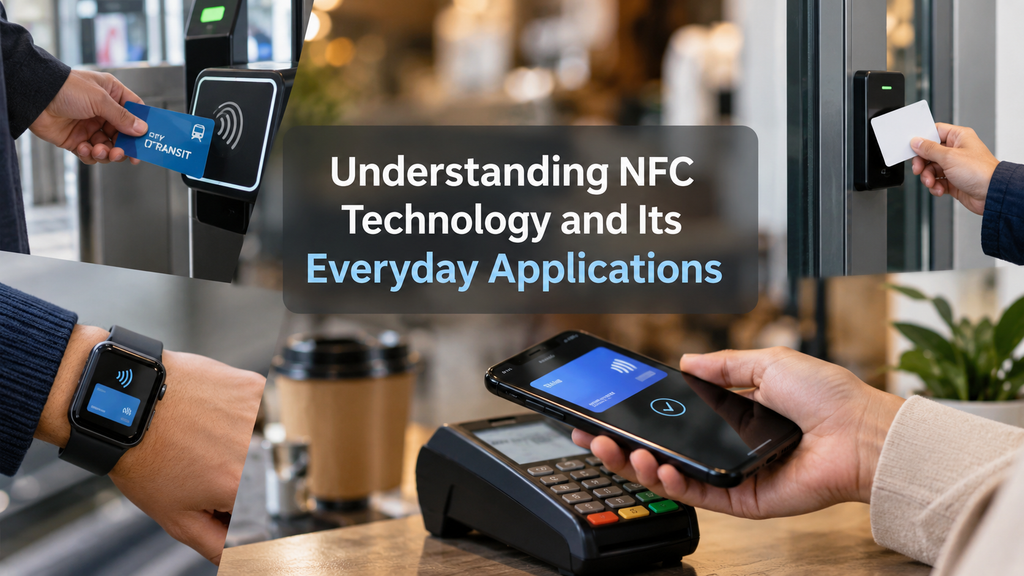
One of the biggest uses of NFC technology in smartphones is contactless payment. Digital payment systems allow users to store their bank cards or payment details on their phones. Instead of using a physical card, users can simply bring their phone close to a payment machine to complete a purchase.
NFC technology also helps smartphones connect with other devices. For example, some wireless headphones, speakers, and cameras use NFC for quick pairing. Instead of searching through Bluetooth settings, users can simply tap their phone near the device to establish a connection.
Another useful feature is sharing information. NFC can be used to share contact details, website links, or small amounts of data between compatible devices. Although many people now use internet based sharing methods, NFC remains useful because of its speed and convenience.
Contactless Payments and Digital Wallets
One of the most popular applications of NFC technology is contactless payment. Digital wallets have changed the way people pay for products and services around the world.
Services that use NFC allow users to store payment cards securely on smartphones and smart watches. When making a payment, the device communicates with a compatible payment terminal through NFC signals.
The popularity of NFC payments has increased because they are fast and convenient. People no longer need to carry multiple cards or search for cash during transactions. A smartphone or smartwatch can perform the same function in a few seconds.
Security is another important reason behind the growth of NFC payments. NFC transactions often use encryption and token based systems, which means the actual card information is not directly shared during payment. Many devices also require fingerprint scanning, face recognition, or a password before completing a transaction.
As businesses continue to adopt digital payment systems, NFC technology is expected to become even more common in shops, restaurants, transportation systems, and public services.
NFC Technology in Smart Cards and Access Systems
NFC technology is widely used in smart cards and access control systems. Many offices, universities, hotels, and residential buildings use NFC enabled cards or devices for security purposes.
For example, employees may use NFC access cards to enter workplaces. Instead of using traditional keys, they simply tap their card near a reader. The system checks the information stored on the card and allows access if the user has permission.
Hotels also use NFC technology for digital room keys. Guests can sometimes use their smartphones to unlock hotel rooms without carrying a physical key card.
This technology improves convenience while also helping organizations manage security. Administrators can easily add or remove access permissions through digital systems.
NFC Tags and Smart Information Sharing
Another interesting application of NFC technology is NFC tags. These small electronic tags can store simple information and can be placed on different objects.
When someone brings an NFC enabled smartphone close to an NFC tag, the phone can read the stored information. NFC tags do not require batteries and can be used in many creative ways.
Businesses use NFC tags for marketing purposes. A customer can tap a phone on a product label to open a website, view product details, read instructions, or access special offers.
Museums and exhibitions also use NFC technology to provide visitors with additional information about displays. Instead of reading printed descriptions, visitors can access digital content through their smartphones.
In homes, NFC tags can be used for automation. A person can place a tag near a desk or door and program it to perform actions such as turning on a specific phone setting or opening an application.
NFC Technology and Transportation
Transportation systems around the world are also benefiting from NFC technology. Many public transport networks use contactless cards that allow passengers to quickly enter buses, trains, and subway systems.
Instead of buying tickets every time, passengers can use NFC enabled cards or smartphones to pay fares. This makes transportation faster and reduces waiting times.
Airports also use NFC technology in digital boarding passes and identification systems. Travelers can use smartphones to access tickets and verify information without printing physical documents.
The use of NFC in transportation shows how this technology can improve everyday movement and create smoother experiences for millions of people.
Advantages of NFC Technology
NFC technology provides many benefits that make it valuable for modern users. One major advantage is convenience. Users can complete tasks quickly without using cables or complicated settings.
Another benefit is speed. NFC connections usually happen within seconds, making them ideal for payments, authentication, and quick data exchange.
Security is also an important advantage. Because NFC works over a very short distance, it reduces the chance of unwanted communication compared to longer range wireless technologies. Many NFC applications also include additional security features such as encryption and authentication.
NFC technology is also energy efficient. NFC tags can operate without batteries, and many NFC processes require very little power.
Limitations of NFC Technology
Although NFC technology has many advantages, it also has some limitations. The biggest limitation is its short communication range. Devices must be very close together for NFC to work properly.
Another limitation is the limited amount of data that NFC can transfer. It is not suitable for sending large files or streaming media.
NFC also requires compatible hardware and software. If two devices do not support NFC, they cannot communicate using this technology.
Despite these limitations, NFC remains highly useful because it is designed for specific tasks where speed, security, and simplicity are important.
The Future of NFC Technology
The future of NFC technology looks promising as more industries continue to adopt digital solutions. As smartphones become more advanced and connected devices become more common, NFC will likely play an important role in smart homes, digital identity systems, healthcare, and business services.
Future applications may include improved digital keys, advanced payment solutions, better device connections, and more personalized user experiences.
With the growth of the Internet of Things, NFC technology may become even more important because it allows people to interact easily with connected devices.
Conclusion
NFC technology has become an important part of modern digital life. Although many people use NFC every day without thinking about it, this technology quietly supports many activities including payments, transportation, access control, and information sharing.
The ability to connect devices with a simple tap has made NFC technology one of the most convenient wireless communication methods available today. Its combination of speed, security, and ease of use makes it valuable for both individuals and businesses.
As technology continues to develop, NFC will likely become even more integrated into everyday experiences. From smartphones and smart cards to future smart devices, NFC technology will continue helping people connect, communicate, and complete tasks in simpler and faster ways.

How AI Image Tools Work in Simple Terms

Understanding Software Updates and Why They Matter
What Li Fi Technology Could Mean for Wireless Connectivity
About The Author
