Understanding No Code and Low Code Software Platforms: A Simple Guide to Modern App Development
Introduction
Technology is changing the way people create software. In the past, building an application required advanced programming knowledge, years of experience, and a team of professional developers. Companies needed skilled programmers to write thousands of lines of code before a simple business idea could become a working digital product. Today, the situation is different because of no code and low code software platforms.
No code and low code platforms have made software development easier, faster, and more accessible. These platforms allow businesses, students, entrepreneurs, and professionals to create applications without depending completely on traditional programming methods. With visual tools, drag and drop features, and ready made components, users can build websites, mobile apps, automation systems, and business solutions with less technical knowledge.
The growth of no code and low code software platforms shows how technology is becoming more inclusive. People who understand their business needs but do not know complex programming languages can now participate in the software creation process. These platforms are helping organizations save time, reduce costs, and bring new ideas to life faster.
What Are No Code and Low Code Software Platforms?
No code and low code software platforms are development environments that allow users to create software applications with minimal or no programming. Instead of writing everything manually, users work with visual interfaces where they can select features, connect different elements, and customize applications according to their needs.
A no code platform is designed for people who have little or no programming experience. Users can create applications by using pre built templates, visual workflows, forms, and simple settings. The platform handles the technical coding in the background.
A low code platform is slightly different. It also provides visual development tools, but it allows developers to add custom code when necessary. This gives professional programmers more flexibility while still reducing the amount of traditional coding required.
Both approaches aim to make software development faster and more efficient. The main difference is the level of coding knowledge required. No code focuses on complete simplicity, while low code provides a balance between simplicity and customization.
How Do No Code Platforms Work?
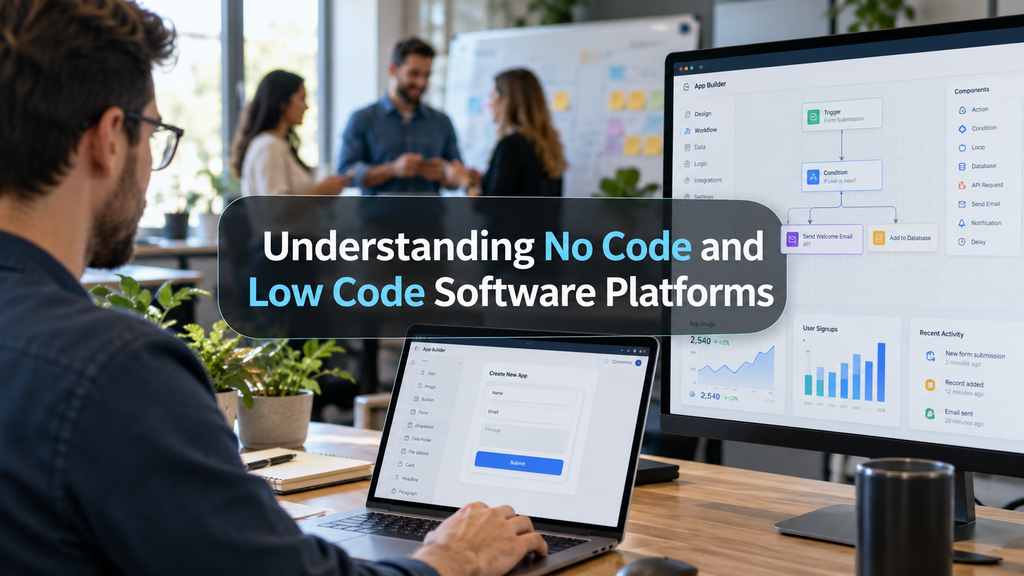
No code software platforms work through visual development systems. Instead of typing programming instructions, users interact with graphical elements. They can create applications by selecting options, arranging components, and defining rules.
For example, someone creating a customer management system can choose a database template, add customer information fields, create forms, and set automatic notifications without writing code. The platform converts these actions into technical instructions that the computer understands.
Most no code platforms include features such as drag and drop builders, workflow automation, database management, and integration tools. These features allow users to connect different services and create complete digital solutions.
The goal of no code platforms is not to replace all professional developers but to help more people participate in technology creation. They allow businesses to solve everyday problems quickly without waiting for long development cycles.
How Do Low Code Platforms Work?
Low code software platforms combine visual development with traditional programming. They provide ready made components that reduce manual coding but still allow developers to add custom features.
A developer can use a low code platform to build the basic structure of an application using visual tools. After that, they can write custom code for advanced functions, special designs, or unique business requirements.
For example, a company may use a low code platform to create an internal employee management system. The platform can handle forms, databases, and user accounts, while developers can add custom security features or advanced reporting tools.
Low code platforms are popular among businesses because they increase developer productivity. Instead of spending weeks creating basic features from the beginning, developers can focus on improving the application and solving complex problems.
The Difference Between No Code and Low Code
Although no code and low code platforms are closely related, they serve different audiences and purposes.
No code platforms are mainly designed for business users, entrepreneurs, and beginners. They are useful for creating simple applications, websites, automated workflows, and prototypes without programming skills.
Low code platforms are designed for professional developers and technical teams who want to speed up development while maintaining customization options.
The main differences include:
No code platforms require little to no programming knowledge.
Low code platforms allow some programming for advanced customization.
No code applications are usually simpler and faster to create.
Low code applications can handle more complex business requirements.
No code focuses on accessibility, while low code focuses on productivity.
Both approaches are valuable because they solve different challenges in software development.
Benefits of No Code and Low Code Software Platforms
Faster Software Development
One of the biggest advantages of no code and low code platforms is speed. Traditional software development can take months, especially for large applications. These platforms reduce development time by providing ready made tools and components.
Businesses can test ideas quickly, create prototypes, and launch solutions faster than before. This speed is especially useful in competitive industries where quick innovation is important.
Reduced Development Costs
Building software traditionally requires hiring experienced developers, designers, and technical specialists. This can be expensive for small businesses and startups.
No code and low code platforms reduce costs by allowing fewer resources to create useful applications. Companies can develop internal tools without always needing large development teams.
Easy Access for Non Technical Users
One of the most important advantages of no code platforms is that they allow non technical people to create software. Business owners, teachers, marketers, and other professionals can build solutions without learning complex programming languages.
This creates more opportunities for innovation because ideas are no longer limited only to people with coding skills.
Improved Productivity for Developers
Low code platforms help professional developers work more efficiently. They can avoid repetitive coding tasks and focus on more important challenges.
By using pre built components, developers can complete projects faster and improve software quality.
Better Business Automation
No code and low code platforms are widely used for automation. Companies can automate tasks such as customer communication, data entry, reporting, and approval processes.
Automation reduces human errors and saves valuable time. It allows employees to focus on creative and strategic activities.
Common Uses of No Code and Low Code Platforms
Website Development
Many people use no code website builders to create professional websites without programming. These platforms provide templates, design tools, and hosting options.
Small businesses, bloggers, and organizations can create online platforms quickly and maintain them easily.
Mobile Application Development
No code and low code tools allow users to create mobile applications for different purposes. Businesses can build customer apps, employee apps, and service platforms without traditional development methods.
Business Process Automation
Companies use these platforms to automate daily operations. Examples include invoice processing, employee onboarding, customer support systems, and inventory management.
Data Management Applications
Organizations can create custom databases and management systems to store and organize information.
These applications help businesses track customers, products, employees, and other important data.
Prototype Creation
Startups often use no code and low code platforms to create prototypes before investing in full development. A prototype helps test ideas and collect user feedback.
Challenges of No Code and Low Code Platforms
Although these platforms provide many benefits, they also have some limitations.
One challenge is customization. No code platforms may not provide enough flexibility for highly complex applications. Users may need low code solutions or traditional development for advanced projects.
Another challenge is security. Businesses must carefully select reliable platforms and follow proper security practices when handling sensitive information.
There can also be dependency issues. If a company relies heavily on a specific platform, changing providers later may become difficult.
Performance can also be a concern for very large applications. Traditional coding may still provide better control for systems that require maximum speed and efficiency.
The Future of No Code and Low Code Development
The future of no code and low code software platforms looks promising. As businesses continue to adopt digital solutions, the demand for faster and easier development methods will increase.
Artificial intelligence is also improving these platforms. Future tools may allow users to describe their ideas in simple language and automatically generate applications.
For example, a person may explain that they need a customer tracking system, and an AI powered platform could create a basic application automatically.
These developments will make software creation even more accessible. More people will be able to transform their ideas into digital products without needing advanced technical skills.
Conclusion
No code and low code software platforms are changing the way applications are created. They are making software development faster, easier, and available to a wider range of people. While traditional programming remains important for complex systems, these modern platforms provide valuable solutions for businesses, developers, and everyday users.
No code platforms help beginners create applications without programming, while low code platforms support developers by reducing repetitive work and increasing productivity. Together, they are creating a new approach to software development where technology becomes more accessible.
As digital transformation continues, no code and low code software platforms will play an important role in helping organizations innovate, automate tasks, and build solutions more efficiently. These platforms represent a future where creating software is not limited to experts but becomes a skill that more people can learn and use.

Understanding Bluetooth and Its Everyday Uses

How Modern Computer Processors Handle Multiple Tasks

Understanding Software Updates and Why They Matter
About The Author
