
How QR Codes Store and Share Information
In today’s digital world, technology has changed the way people access and share information. One small invention that has become a common part of daily life is the QR code. We see QR codes on product packaging, restaurant menus, payment systems, tickets, advertisements, and even educational materials. Many people use QR codes every day, but only a few understand how these small square patterns actually store and share information.
A QR code, which means Quick Response code, is a type of two dimensional barcode designed to store information in a compact form. Unlike traditional barcodes that store information in only one direction, QR codes can store data both horizontally and vertically. This ability allows them to hold much more information and makes them useful for many different applications.
The growing use of smartphones has made QR codes more popular than ever. Almost every modern smartphone camera can scan a QR code instantly. With a simple scan, users can open websites, make payments, download applications, view digital menus, access contact information, or receive important details. Understanding how QR codes store and share information helps us appreciate the technology behind this simple but powerful tool.
What Is a QR Code?
A QR code is a digital information storage system made up of small black and white squares arranged on a square grid. These patterns are not random. Each square represents information that can be read and processed by a QR code scanner.
QR codes were originally developed in Japan in the 1990s for tracking automobile parts during manufacturing. The goal was to create a system that could store more information than traditional barcodes and could be scanned quickly. Over time, QR code technology expanded beyond factories and became useful in many industries around the world.
Today, QR codes are used for communication, marketing, banking, education, healthcare, transportation, and many other areas. Their ability to provide quick access to digital information has made them an important part of modern technology.
How QR Codes Store Information
The main idea behind QR code technology is converting information into a pattern that computers can understand. A QR code does not store information as readable text. Instead, it converts data into a digital format called binary code.
Computers understand information through two basic states, represented by numbers 0 and 1. A QR code uses small squares called modules to represent these digital values. The dark squares and light spaces create a pattern that contains the stored information.
When information is added to a QR code, a special algorithm converts the data into binary form. This binary information is then arranged inside the QR code structure. The result is the familiar square image that can be scanned by a smartphone or QR reader.
For example, if a QR code contains a website address, the website link is converted into digital information and stored inside the pattern. When someone scans the QR code, the scanner reads the pattern, converts it back into the original information, and opens the website.
The Structure of a QR Code
A QR code may look like a simple collection of black and white squares, but it has a carefully designed structure. Different parts of the QR code perform different functions.
The three large square patterns located at the corners of a QR code are called finder patterns. These patterns help scanners identify the position and direction of the QR code. They allow a smartphone camera to recognize the code even if it is rotated or viewed from different angles.
Another important part is the alignment pattern. This helps scanners read larger QR codes accurately by correcting possible distortions.
The timing patterns are lines of alternating black and white squares that help determine the position of smaller modules inside the QR code.
The data area contains the actual stored information. This is where the encoded text, website address, payment details, or other data is placed.
QR codes also include error correction information. This allows the code to remain readable even if part of it is damaged, dirty, or covered.
How QR Code Scanning Works
Scanning a QR code may appear simple, but several steps happen within seconds. When a smartphone camera focuses on a QR code, the device uses image processing technology to analyze the pattern.
First, the camera detects the QR code shape and identifies the position markers. The scanner then reads the arrangement of black and white modules. After that, it converts the pattern into binary data.
The software processes this data and applies error correction techniques to recover any missing information. Finally, the scanner converts the digital information into a useful format.
If the QR code contains a website link, the phone opens the browser. If it contains payment information, the payment application processes the details. If it contains contact information, the phone can save the details directly.
This entire process usually happens within a few seconds, which is why QR codes are known as Quick Response codes.
Types of Information Stored in QR Codes
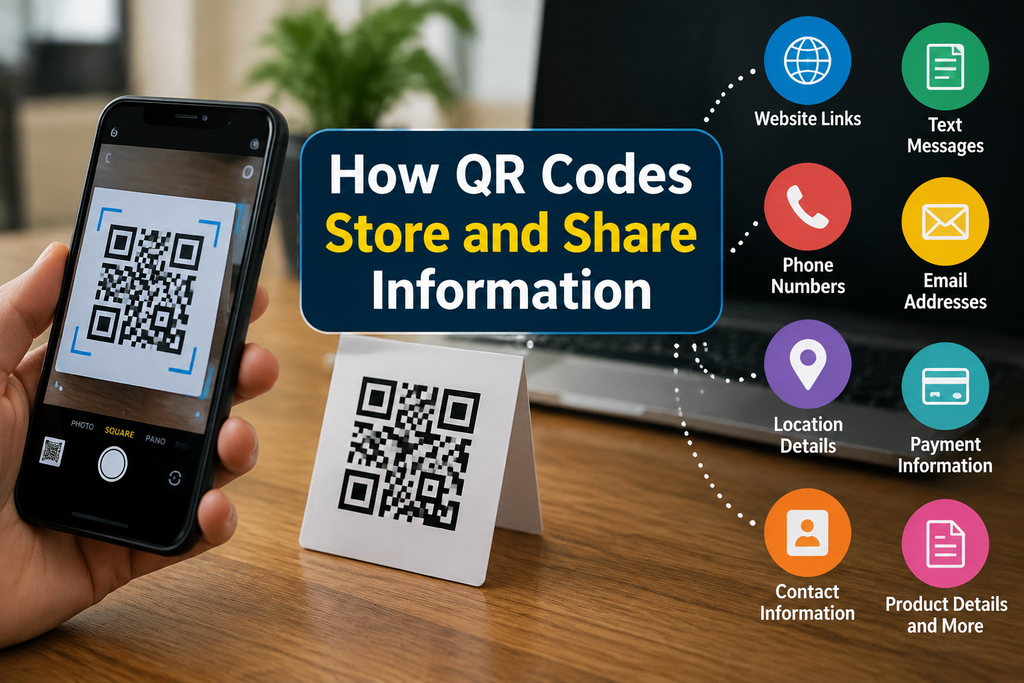
QR codes are flexible because they can store different types of information. Some common examples include website links, text messages, phone numbers, email addresses, location details, and payment information.
Businesses often use QR codes to connect customers with online content. For example, a product package may include a QR code that directs customers to a website containing product details, instructions, or promotional offers.
Restaurants use QR codes for digital menus. Instead of using printed menus, customers can scan a code and view the latest menu on their phones.
Payment systems use QR codes to make financial transactions easier. Customers can scan a payment QR code and complete transactions without entering long account details manually.
Educational institutions also use QR codes to share learning materials, assignments, and online resources with students.
Why QR Codes Are So Popular
One major reason behind the popularity of QR codes is convenience. People do not need to type long website addresses or manually enter information. A simple scan provides instant access.
Another advantage is that QR codes are inexpensive and easy to create. Businesses, organizations, and individuals can generate QR codes without expensive equipment.
QR codes also save physical space. A small printed code can provide access to a large amount of digital information. This makes them useful for packaging, posters, business cards, and advertisements.
Their ability to work with smartphones has also increased their popularity. Since smartphones are widely available, QR codes can be used by millions of people without requiring special devices.
QR Codes and Digital Payments
One of the biggest uses of QR codes today is digital payment. Many countries have adopted QR based payment systems because they provide a fast and simple way to transfer money.
When a customer scans a payment QR code, the code provides the necessary information to complete the transaction. The payment application reads the information and allows the user to confirm the payment.
QR code payments reduce the need for cash and physical cards. They are especially useful for small businesses because merchants can accept digital payments without expensive payment machines.
The growth of mobile banking and financial technology has made QR codes an important part of the modern payment ecosystem.
QR Codes in Marketing and Advertising
Companies use QR codes as a bridge between physical and digital marketing. A printed advertisement can include a QR code that connects customers to online stores, videos, discounts, or product information.
For example, a company may place a QR code on a billboard. A person passing by can scan the code and immediately visit the company website.
This makes advertising more interactive because customers can move from seeing information to taking action within seconds.
QR codes also help businesses understand customer behavior. Some QR systems can track how many people scan a code and measure the effectiveness of marketing campaigns.
Security and Privacy Concerns
Although QR codes are useful, users should be careful when scanning unknown codes. A QR code itself is not dangerous, but it can contain links to unsafe websites or misleading information.
Cybercriminals sometimes create fake QR codes to redirect users to harmful websites. These websites may attempt to steal personal information or financial details.
For safety, users should scan QR codes from trusted sources and check the website address before entering sensitive information.
Businesses should also use secure QR code systems, especially when handling payments or personal data.
The Future of QR Code Technology
The future of QR codes looks promising because digital connectivity continues to grow. As more services move online, QR codes will continue to provide a simple connection between the physical and digital worlds.
Future QR code applications may include advanced identification systems, smart packaging, healthcare records, and improved payment solutions.
With the development of technologies like artificial intelligence and the Internet of Things, QR codes may become even more useful. They can help devices communicate with each other and provide instant access to information.
Although QR codes are already widely used, their potential continues to expand as technology develops.
Conclusion
QR codes are a simple yet powerful technology that has changed the way people store and share information. Behind their small square design is a complex system that converts data into a pattern that computers can read.
From digital payments and marketing to education and business communication, QR codes have become an important part of everyday life. Their ability to provide quick access, store different types of information, and work with smartphones makes them one of the most practical technologies of the modern era.
As digital services continue to grow, QR codes will remain a valuable tool for connecting people with information. Understanding how QR codes store and share information helps us see the technology behind a feature that many people use every day but rarely think about.

Understanding NFC Technology and Its Everyday Applications

What Digital Twins Are and How They Work

What Is Edge Computing and Why Does It Matter
About The Author
